'%3e%3cpath%20d='M11.9883%2017.2998L4.98926%2010.345L6.04095%209.2998L11.9883%2015.2104L17.9357%209.2998L18.9874%2010.345L11.9883%2017.2998Z'%20fill='%23192134'/%3e%3c/g%3e%3cdefs%3e%3cclipPath%20id='clip0_1062_4923'%3e%3crect%20width='23.9969'%20height='24'%20fill='white'%20transform='translate(-0.00976562%200.799805)'/%3e%3c/clipPath%3e%3c/defs%3e%3c/svg%3e)
Drinking bottles, washing machines and watches – stainless steel offers several advantages besides its characteristic attractive shine. Although it is strong, the material is easy to shape, durable and corrosion-resistant, allowing it to be used in a wide variety of industries.
Due to the impending consequences of climate change and the urgent need to reduce emissions, demand for sustainable products is rising. But there is a problem: Stainless steel production is often very carbon intensive. Emissions from the extraction and production of alloy elements are added to the existing sources of carbon emissions in traditional steel manufacture.
We developed a categorization system to enable our customers and all other partners in the supply chain to immediately identify the carbon footprint of our stainless steel products. This way, customers can reduce their own carbon footprint more consciously and include more sustainable products in their portfolios. This enhanced transparency also creates further incentives for the use of more sustainable production processes on the manufacturing side.

Stainless steel categorization
Nexigen® stainless steel categorization
How our categorization works
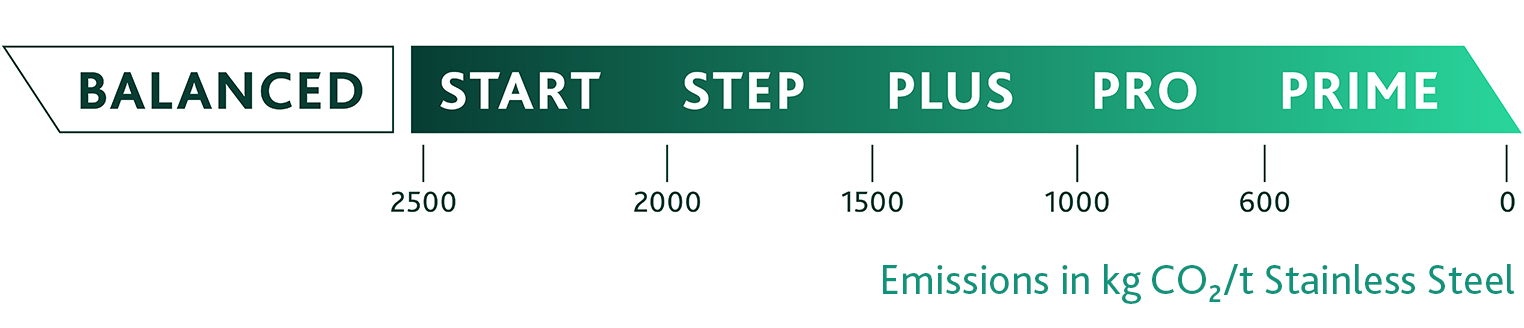
We divide CO2-reduced stainless steel products into five categories based on the product’s actual carbon footprint from resource extraction and production to the point where they leave our warehouse. They range from START (with a footprint from 2,500 to 2,000 kg CO2 per metric ton) to PRIME (600 to 0 kg CO2 per metric ton).
BALANCED is a separate category for “reduced balance” stainless steel products. Depending on the raw materials and energy sources used, products manufactured within the same production facility may have different carbon footprints. Balancing involves first taking the facility’s total CO2emissions into account and then calculating the average carbon emissions per metric ton of the manufactured product. Reduced emissions are thus allocated to limited volumes, which reduces the carbon footprint balance. These stainless steel products fall within our BALANCED category.
✓ Methodology based on international standards
Our calculation methodology follows the internationally renowned GHG Protocol.
✓ All emissions from resource extraction and production to the point where they leave our warehouse are included
Emission ratings include production (Scope 1), purchased power (Scope 2) & supplier chain (Scope 3 Upstream).
✓ No offsetting is included in CO2 load categorization
The physical production emissions determine the product’s categorization; CO2-offsetting is not included.
More background information on stainless steel
Contact us
If you would like to buy CO2-reduced products from us or learn more about Nexigen®, please send us a message below. We look forward to hearing from you!
Nexigen® delivers CO₂-reduced steel and metal solutions
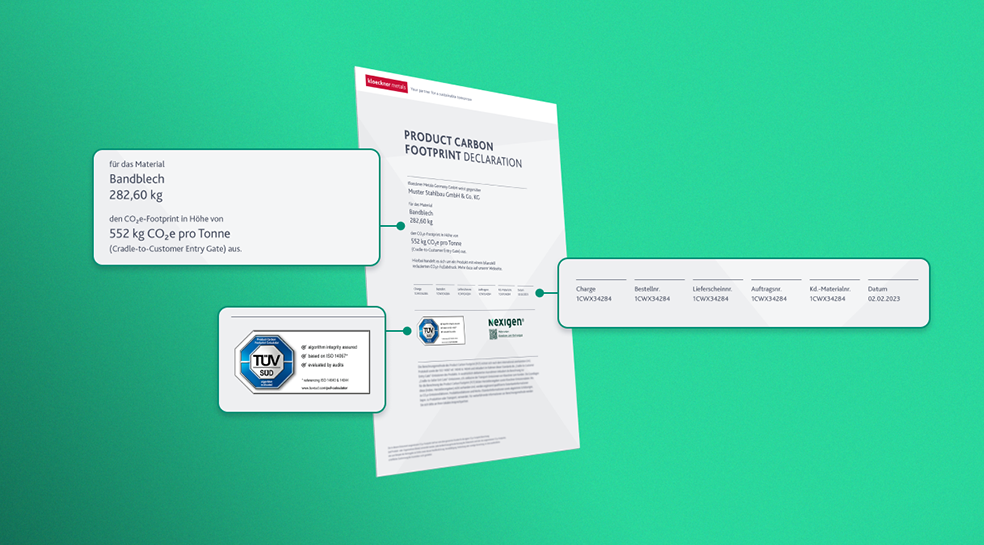
With our product categorizations and precise calculation of the product carbon footprint down to the kilogram, customers get full transparency and access to CO₂-reduced steel and metal products.